

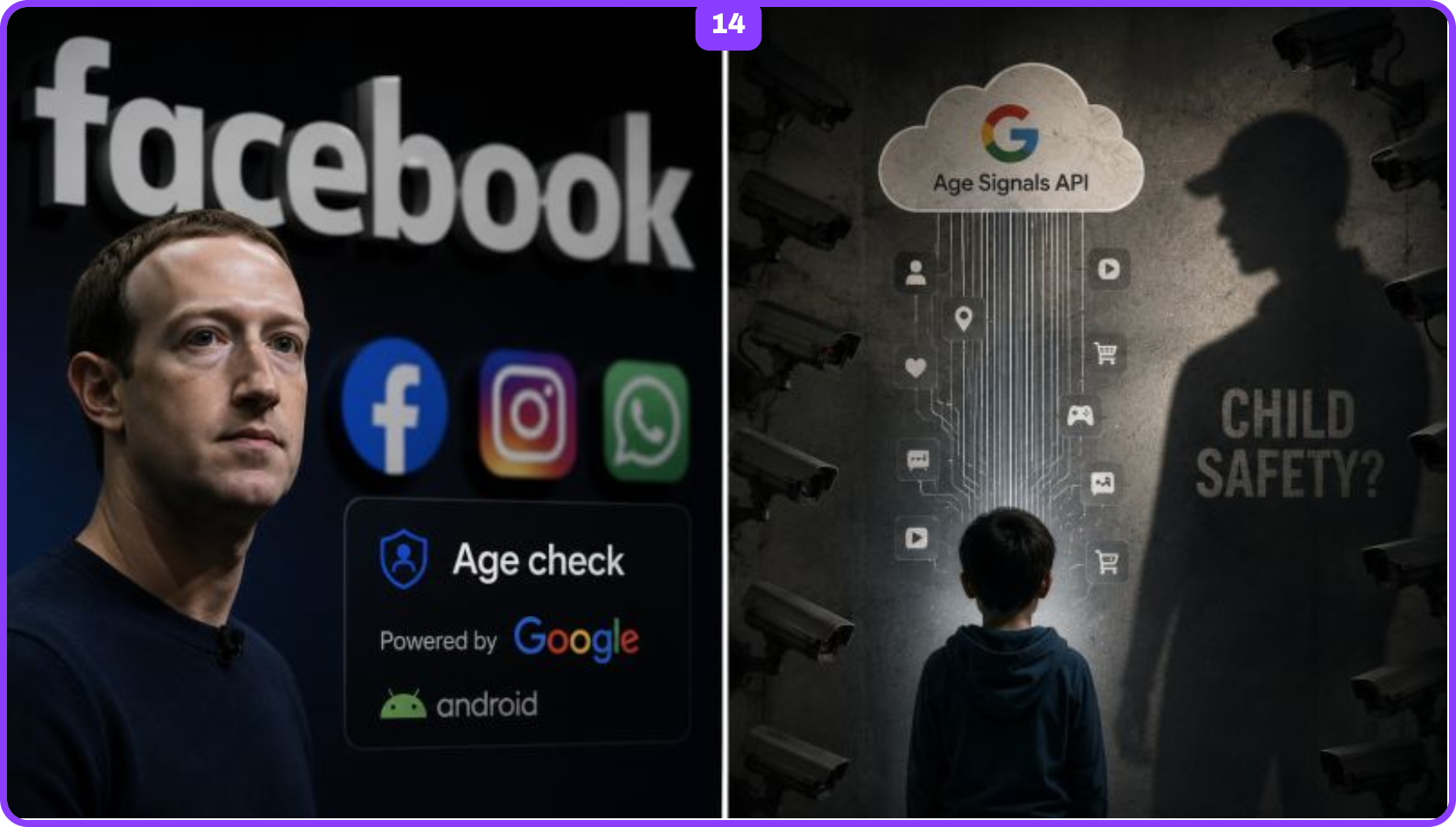
Google's announcement about a new age verification API proves governments and tech companies are working together to roll out surveillance technology under the guise of child safety.
The Play Age Signals API is supposed to let parents protect their kids from inappropriate apps, but it's technically redundant because Android phones already provide this capability.
If Facebook implemented the API, the app checks a child's age after installation by asking Google Play services for the account's age range. Google reads the child profile and sends back an age signal. The app then attempts to adjust visible features or content to match that age group.
Google's claim that developers will use this API to tailor in-app experiences by age is fantasy, and potentially dangerous. Like today's failed content moderation, it won't happen properly, or at all. I believe this will give parents a false sense of security while putting kids in more danger.
Some companies might even drop their app's age rating from 18+ to 12+ or 12+ to 4+, claiming they'll restrict features or content using the age band.
Intentionally or not, they'll get it wrong often enough to cause more harm than they do today. Moreover, the API doesn't stop teens from downloading apps from third party stores instead of Google Play.
Google says companies aren't allowed to use age checking for advertising, profiling or analytics. I'll let you decide how likely that is. Google can now centralise identity telemetry and monitor user activity across apps. Every age check runs through Google, telling Google which child account opened which app and when.
In 2025, a federal jury awarded $425M against Google for collecting data from 3rd party apps used by 98M people who had switched off their Web and App Activity setting that was supposed to stop it.
💣 There's no technical reason for this surveillance API.
This new app-based approach and the existing device-based age check requires a parent to sign into their child's device and verify adult consent to establish the child's birthdate.
Android controls outmatch app based age checking. Before a download begins, the Play Store compares the child's birthdate against an app's age classification, and blocks unapproved apps completely. Android also enforces SafeSearch automatically and prevents third party app store installs.
Google built Android, so it obviously knows parents can already protect kids. Governments demanding age verification know it too, and neither has bothered to tell parents how to turn these controls on. It's reasonable to conclude that neither cares about child safety, only about collecting verified identity data for the purpose of corporate surveillance and government control.
Ignore the “pledge” option on the subscriptions page. Everything I publish is free.
Why I’m now writing and building a community on Substack
After repeated requests in LinkedIn comments and messages, I created this Substack so my work has a permanent home beyond algorithm control. LinkedIn restricted my account 3 times without cause before I had a call with their escalation team. My posts rank in the top 0.5%, but some readers report they don’t appear in feeds anymore and must visit my profile directly.
I’m migrating my writing here and keeping most posts within LinkedIn’s 3,000 character limit to respect your time, publishing longer articles only when required. Content remains information heavy, jargon free, and direct.
Everything is free.
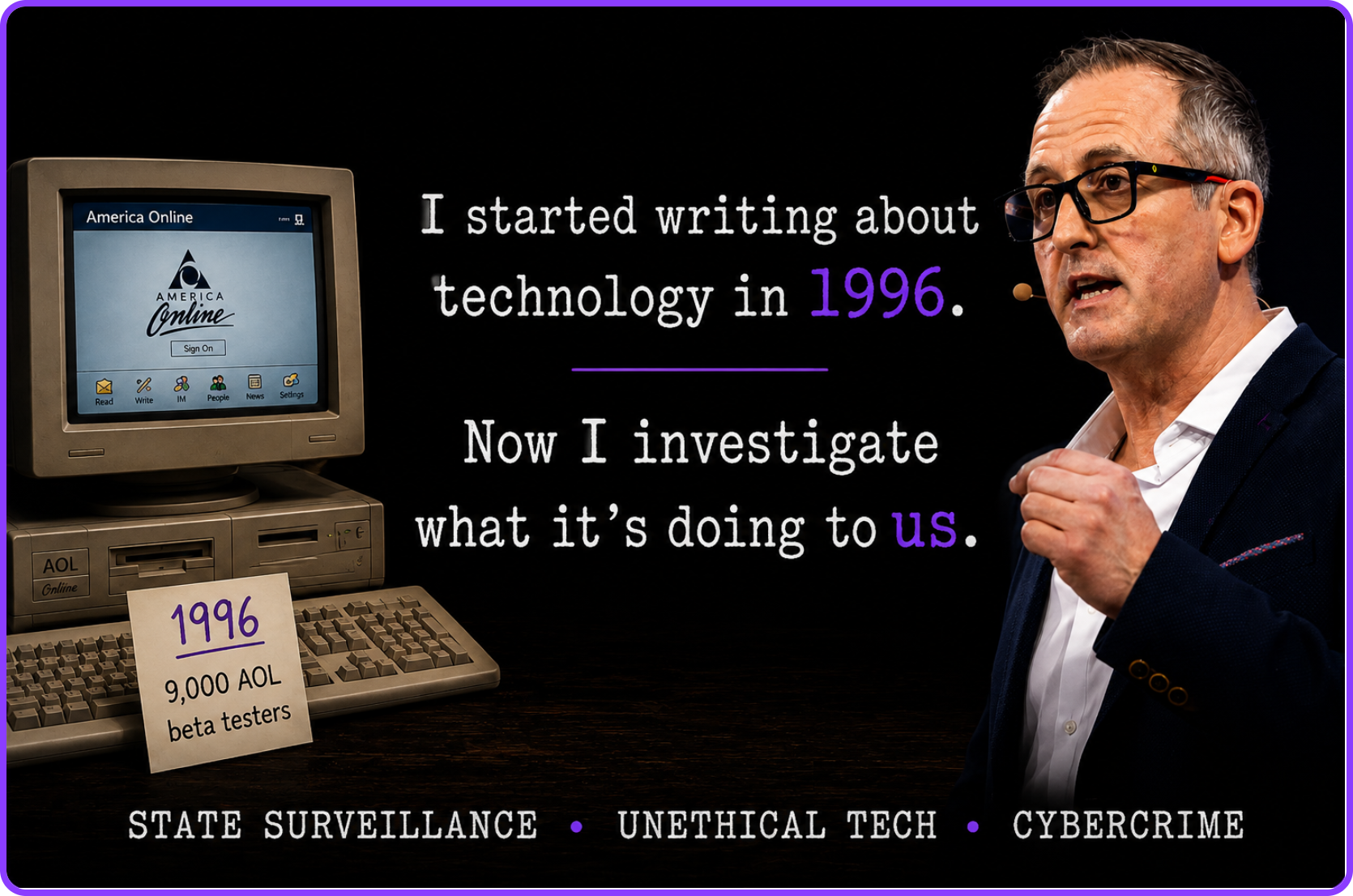
If you’re already a Substack member, you know what to do: follow me to get notified when I publish and join the conversations.
If you arrived from LinkedIn or Twitter, Substack is more than an email newsletter. Create a free account and follow me to see posts in your feed, receive notifications and join the community. I’m loving it because the feed makes it much easier to discover people, ideas, and conversations than LinkedIn.
If you only want email, subscribe and you’ll receive 1 weekly digest rather than an email every time I publish.
My LinkedIn posts regularly attract over 250K readers and 1K comments - they’re in the top 0.5% for readership and engagement. I hope we’ll build the same kind of informed discussion here.